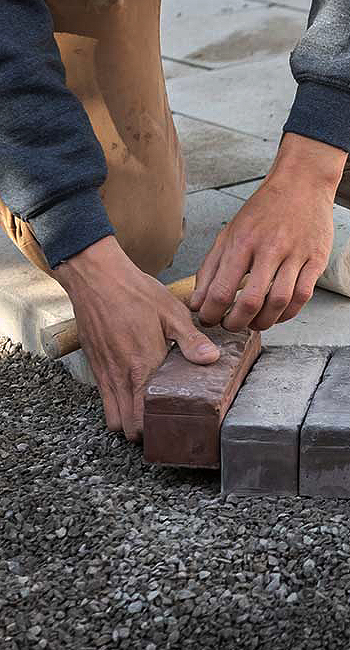
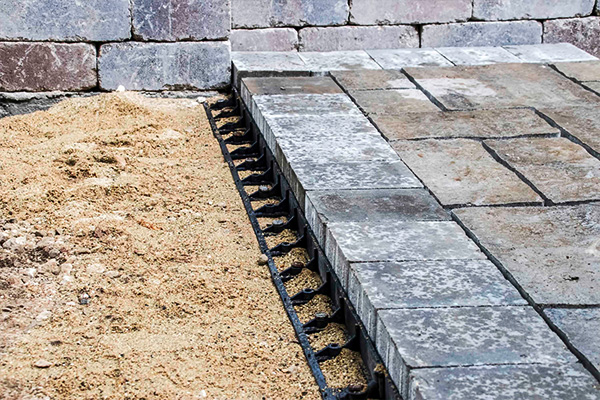
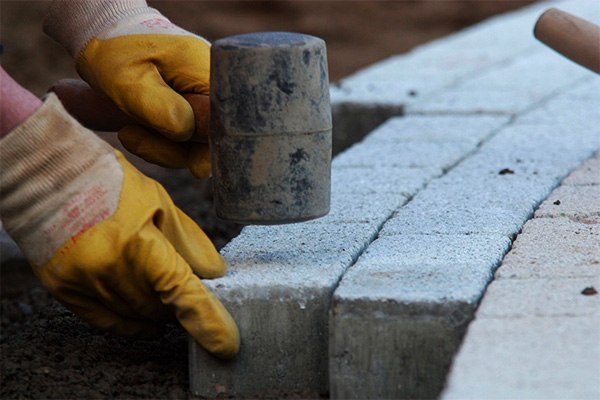
Interlocking pavers can add aesthetic appeal to driveways, patios and walkways. Pavers are also known to be stronger than poured concrete and are easy to maintain and repair. Before laying interlocking pavers, it’s important to create a well compacted, stable base. Begin by excavating all unstable or unconsolidated subgrade material. To estimate the depth of excavation needed, consider the final grade of the project by adding the height of the paver unit, the depth of the bedding sand and the thickness of the compacted base material.
Next, compact the paver base. You will want 3-4 inches of compacted base for pedestrian traffic, 4-5 inches of compacted base for vehicular traffic and 6-8 inches of compacted base if large vehicles will be driving over the paver installation. Fill the excavated site with the appropriate amount of paver base material and compact it using a vibrating plate compactor. The base must be well-compacted and level to provide a smooth, even surface on which to lay the bedding sand. When preparing the grade of the base, be sure to provide a 1/8-1/4 inch of drop per foot for proper drainage. Follow these steps to properly lay interlocking pavers.